


“Stop bleeding us dry!”
“Unified campaign” results in Unite win and hundreds of new members
Reading time: 7 min
Unite lab workers have taken on one of the biggest pathology companies in the world and won, with the successful campaign to improve pay and conditions resulting in a recruitment surge for the union and hundreds of new members joining.
In October 2025 members working for Health Service Laboratories (HSL) and the Doctor’s Laboratory (TDL) voted to accept an offer from employers. This followed a strong campaign from members that involved three days of strike action and strike support targeting TDL’s private clients.
On strike days the lab staff were joined by union members from across London to show their support for these vital workers.
Unite Organiser Finn Morrow said, “Outsourced lab workers across major London NHS Trusts have drawn a line in the sand for the whole pathology sector. Workers will no longer accept a race to the bottom on wages and conditions for the sake of private profiteering.”
The hard fought win for Unite members resulted in a deal that covered around 3000 workers who provide outsourced work for the NHS and private clinics, working in the company’s flagship Halo laboratory, Whittington Hospital, UCL Hospital (60 Whitfield St), North Middlesex Hospital, Barnet Hospital, Royal Free Hospital, Ealing Hospital, Northwick Park Hospital, as well as their hub laboratory in Manchester and other labs across the country.
Emuobo Erhawah is a Specialist Biomedical Scientist and a long standing member of Unite’s HSL- TDL branch. She feels “it is important to be in the union because it helps in gaining collective voice for various issues in the workplace which are usually difficult to negotiate alone.”
This sense of union solidarity amongst staff was important when lab workers were fighting to improve their pay and conditions.
Emuobo has worked in pathology for nearly two decades, before that she lectured at university, and is proud of her time working in the health sector, and said, “In my 19 years in pathology, I worked in both the NHS and private sector. One thing I have noticed is that the NHS has more benefits for staff than the private sector, although the private sector promotes itself as better.
“Working in both proves to me that the NHS has better working conditions.”
Emuobo explained that “The campaign unified most pathology workers in HSL, and made management listen to the collective voices of Unite members.
“It made management improve base pay that was initially proposed, and as result of the campaign there was small improvement in sick pay and other terms and conditions.”
Despite it being like drawing blood from a stone, by organising together the lab workers settled on an average pay increase of 15.4% over two years, bringing them in line with NHS colleagues.
Emuobo explained that one of the most important things that the campaign did was get a “commitment by management to develop a transparent banding system that is like the NHS agenda for change.”
The workers also won a commitment in improving training.
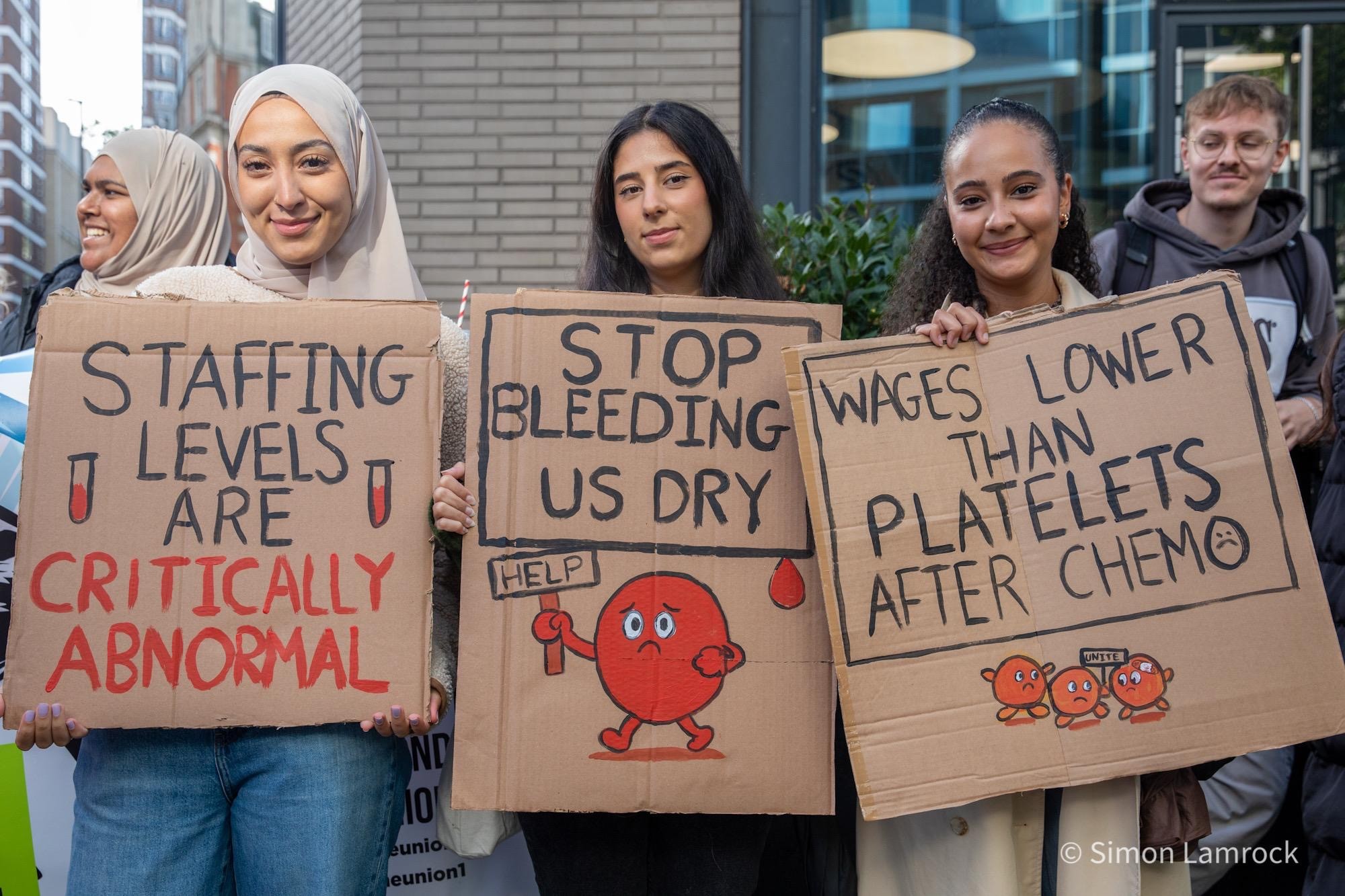
Emuobo said the workforce came together to stand up for their rights and that “the strength of feeling was strong amongst fellow workers because, from the union petitions, they realised how much they have been underpaid for so long, and how much profit the company makes on their behalf.”
This coming together of Unite members happened when they began to realise how much they were being exploited, it also inspired fellow workers to join the union in their droves.
Despite the natural reluctance for anyone working in the health sector to strike, members found it inspiring to have a joint voice and it built confidence and, since the start of the campaign, the union has grown by 850 new members, with 28 becoming new reps.
Emuobo explained that, “Although the decision to strike came with mixed feelings from the workers, at the end they decided to strike as it was obvious that the company was exploiting their workers in both pay and the working conditions.”
“I think this encouraged lots of people to join Unite because everyone started seeing the impact of the voices of the few people who started the campaign.
“With the help of the organisers, members started to speak to each other and encouraged each other to join and pull their strength together. This action alone removed the fear from members who have never gone on strike before.”
However Emuobo is aware that this is just that start, and building the branch is a work in progress. The company is now trying to persuade staff not to join “by rewarding the people who didn’t go on strike and employing immigrants who are scared to join the union because they think their work permits may not be renewed.”
Despite the ongoing challenges they face, the win was an important victory for the workforce who have seen a decade of NHS England accelerating its push for the consolidation of pathology services in the form of ‘hub and spoke networks’.
This consolidation has resulted in widespread privatisation of the services, as hospital labs have been stripped down and non-urgent work centralised in hub laboratories operated by multinational companies.
Finn explained that, “Our successful strike at HSL demonstrates that pathology providers can no longer rely on a compliant workforce when seeking to impose their cost-cutting agenda of driving down wages, slashing terms and conditions, understaffing, and underinvestment in training.”
At the time of the victory, Unite general secretary Sharon Graham said: “HSL and its sister companies were doing our members a disservice with their pay and conditions.
“Staff should be congratulated on this terrific victory and securing a pay award they fully deserve.
“Let this stand as a warning to any private sector NHS provider who thinks they can get away with short-changing our members. Unite wins for workers and is coming for you.”
The determination of these lab workers to take on a huge employer and win improved pay and conditions shows the power of solidarity and standing together – and is an inspiration to campaigning workers everywhere.
By Keith Hatch


